






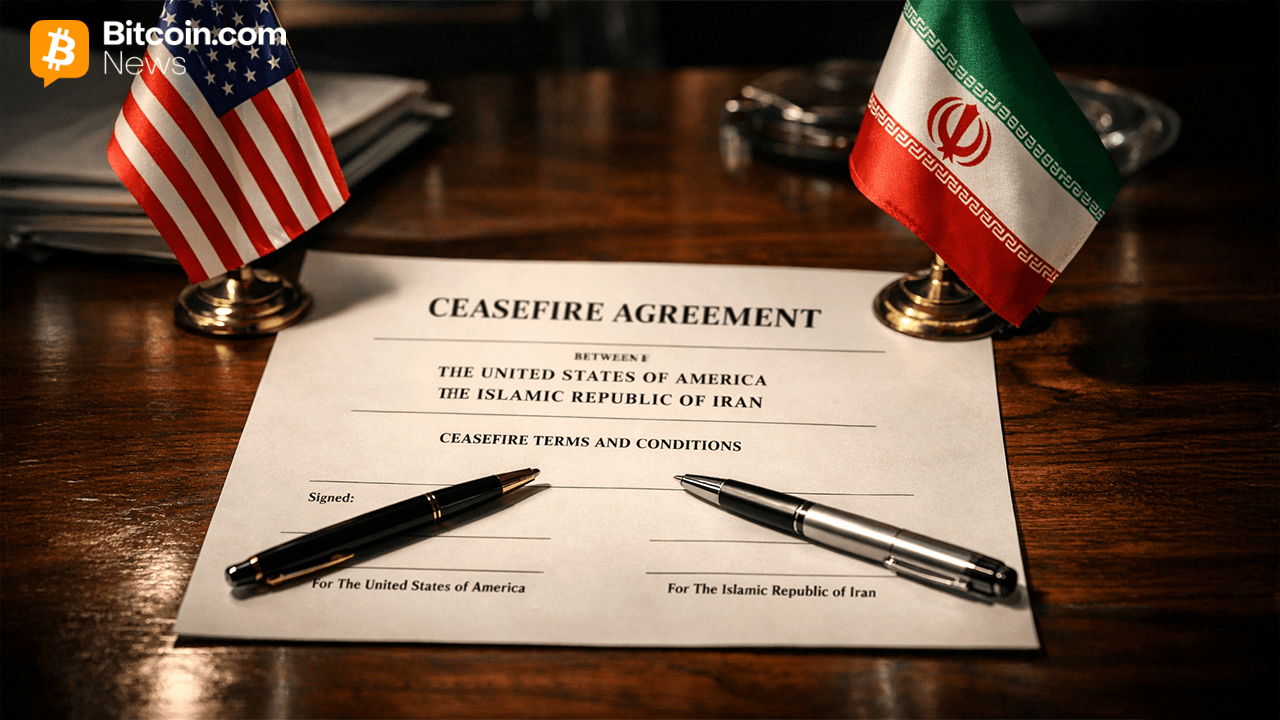
Trump struck a two-week ceasefire with Iran on April 7, 2026, and within hours, blockchain analysts were asking who knew first.
Key Takeaways:
- Trump’s April 7 ceasefire with Iran reopened the Strait of Hormuz, sending oil prices below $100 and triggering a bitcoin rally.
- Polymarket wallets with near-zero history turned as little as $10k into $154k+ betting on the exact April 7 ceasefire outcome.
- Prediction markets and Hyperliquid face growing calls for scrutiny over pre-announcement trades.
Newly Created Wallets Netted Hundreds of Thousands on Polymarket and Hyperliquid Before Iran Ceasefire News
The deal, mediated in part by Pakistan, required Iran to reopen the Strait of Hormuz, the chokepoint for roughly 20% of global oil supply. In exchange, the U.S. and Israel suspended bombing operations. Trump called it a “double-sided CEASEFIRE” on Truth Social around 10:32 p.m. UTC, describing Iran’s 10-point proposal as a “workable basis” for long-term negotiations.
Markets moved fast. Oil prices fell sharply, with some reports placing Brent below $100 per barrel as the blockade threat faded. Bitcoin and other risk assets climbed. Traders who were positioned correctly before the announcement made a lot of money. That last part is where the questions start.
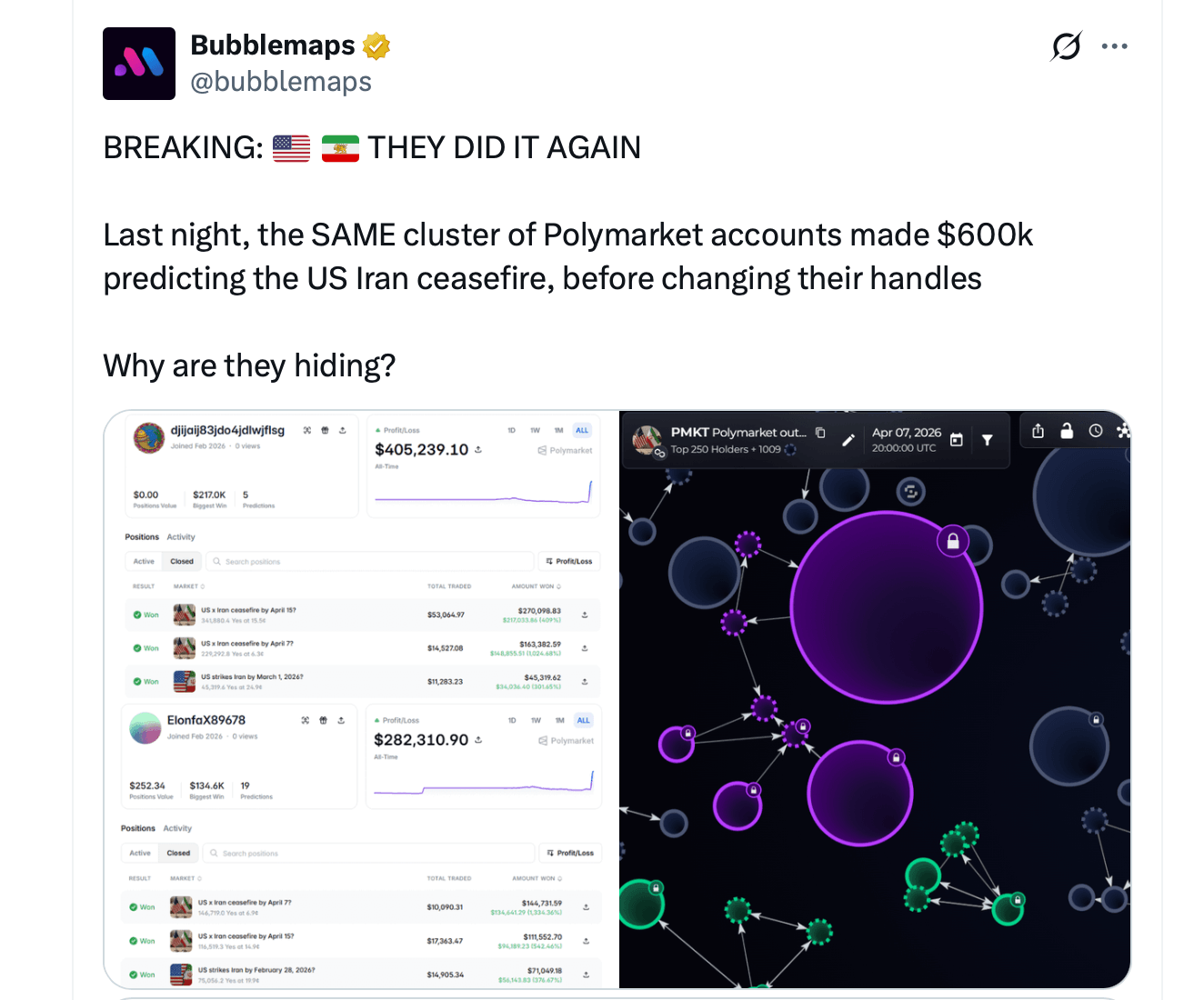
On Polymarket, the leading prediction market for geopolitical outcomes, a market titled “US x Iran ceasefire by April 7?” was trading at roughly 3% to 10% odds in the hours before Trump posted. Those odds spiked close to the announcement. Blockchain analysts and onchain observers identified multiple wallets, newly created or with minimal prior activity, that had loaded up on “Yes” shares at those depressed prices.
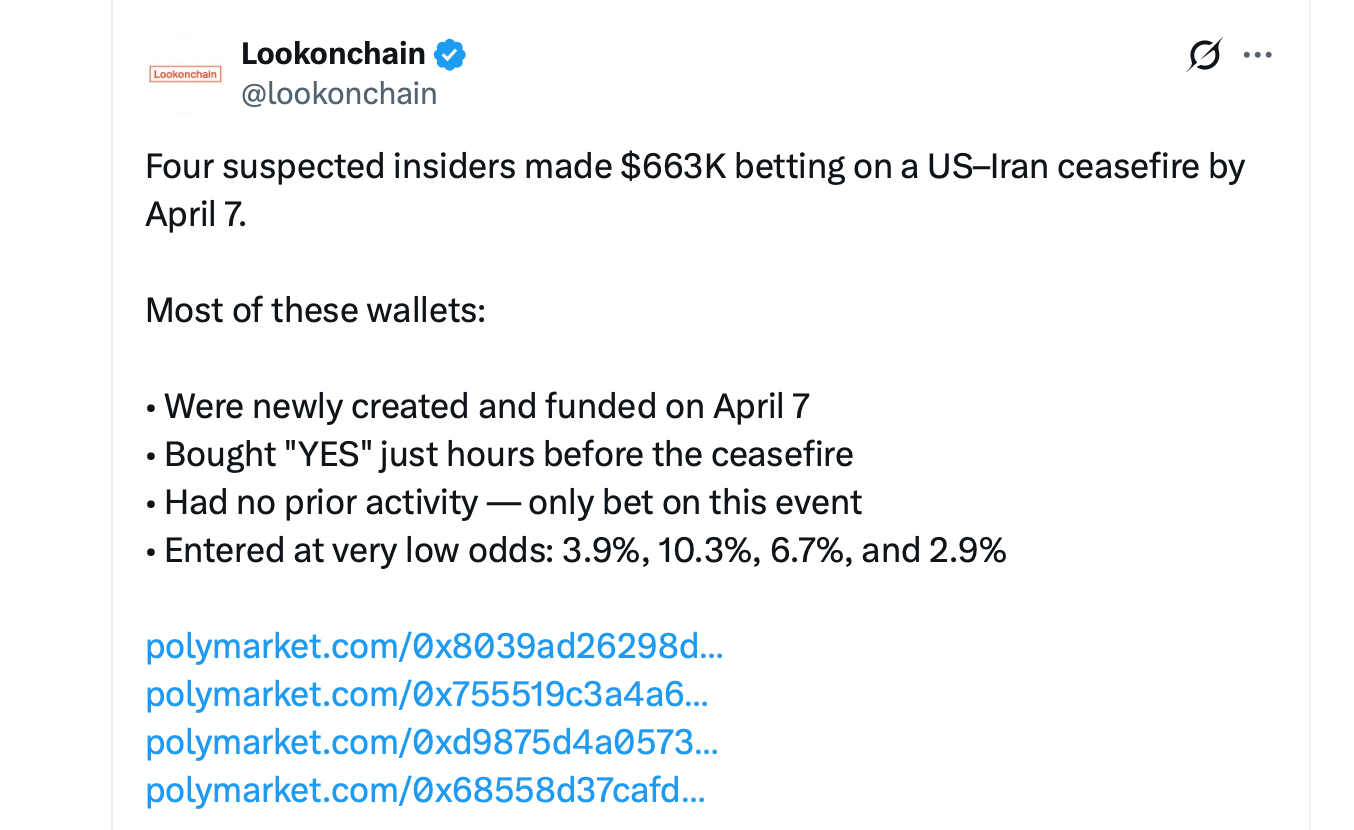
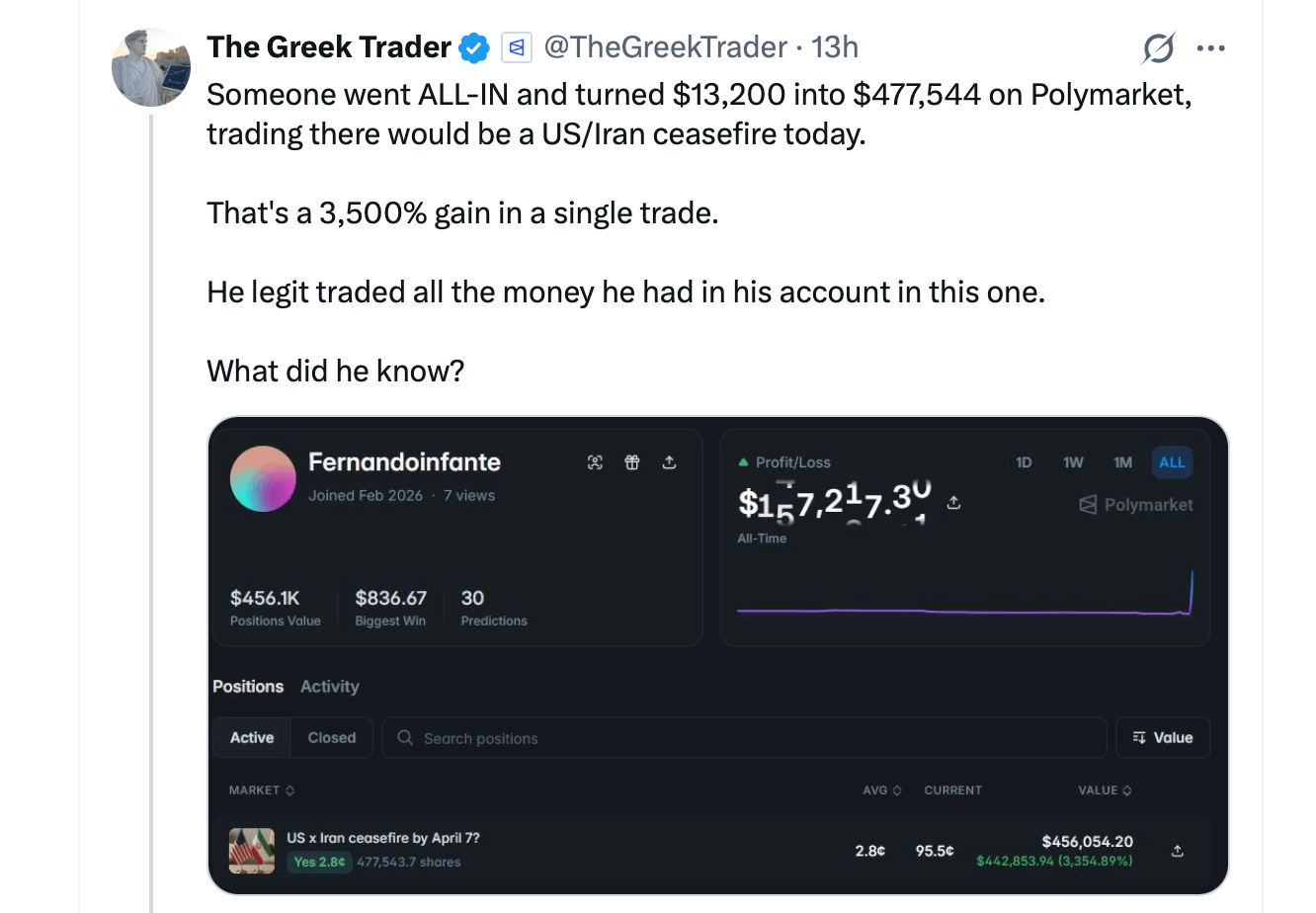
The reported profits are specific. One wallet allegedly turned approximately $10,000 into more than $154,000 in around 22 hours. Three wallets attributed to accounts referenced as fernandoinfante, 25xp, and S7777 reportedly netted a combined $484,000 to $663,000. Separate account clusters, including one that changed its handle from MAGAMESSI, reportedly netted more than $500,000 across April 7 and April 15 ceasefire buckets at odds between 6% and 15%.
These wallets were funded on or shortly before April 7 and had placed no meaningful prior trades. That detail is what caught attention.
Onchain trackers and slueths, including Bubble Maps, Lookonchain, the Greek Trader, DankoWeb3, Frostikkkk, and Bimbacrypto flagged the activity in real time on X. Polymarket states it prohibits trading on nonpublic information, but enforcement is handled through post-hoc review. The platform has previously removed certain war-related markets, citing integrity concerns.
Hyperliquid, a decentralized perpetuals exchange, drew separate scrutiny. One widely shared post from X account BudhilVyas alleged that a single whale opened a roughly $60 million, 5x leveraged short on oil and a $16 million, 10x leveraged long on bitcoin hours before the announcement. With oil dropping massively and bitcoin moving higher on the ceasefire news, the estimated profit on those positions was around $5 million. The same post estimated total insider profits across Polymarket and Hyperliquid at more than $200 million.
These figures have not been independently verified as of April 8. Hyperliquid’s onchain architecture makes large positions publicly visible, but size alone does not confirm foreknowledge. The platform recorded over $46 million in oil liquidations during earlier conflict escalation and a $99 million bitcoin short liquidation following ceasefire signals.
This is not the first time Iran-related geopolitical bets have drawn scrutiny on prediction markets. Similar patterns emerged in February and March 2026 around U.S. and Israeli strike timing, ceasefire windows, and leadership events. Some traders reportedly cleared more than $1 million on prescient calls during that stretch.
No official investigation has been announced. Platforms and analysts note the trades could reflect sophisticated geopolitical modeling, thin-market edges, or coordinated speculation rather than access to nonpublic government communications. One person claimed Jesus Christ provided the info to him. Critics of prediction markets have long pointed to information asymmetry as a structural problem, particularly when markets involve active diplomatic negotiations, military operations, or executive decisions made in private.
Retail traders watching the April 7 action called the setup “rigged” across social media. Whether that characterization holds up to scrutiny is a separate question. The on-chain record, at least, will not disappear.