Key Takeaways
- Relay Protocol says it is actively blocking scam tokens after reports of wallet drains on the new Robinhood Chain.
- The Robinhood Chain, live since July 1, 2026, is reportedly seeing high scam meme coin activity due to its permissionless nature.
- Traders should only trade verified tokens and perform small test swaps to protect assets from 100% loss.
Relay Protocol Warns: There’s Been an Increase in Scam Tokens Designed to Remove Themselves After Purchase
The Relay Protocol platform moved quickly on X to clarify that these incidents do not represent a widespread wallet compromise or an infrastructure breach within Relay. Your private keys and other balances remain secure, as the sophisticated scam logic is contained strictly within the malicious token contract itself.
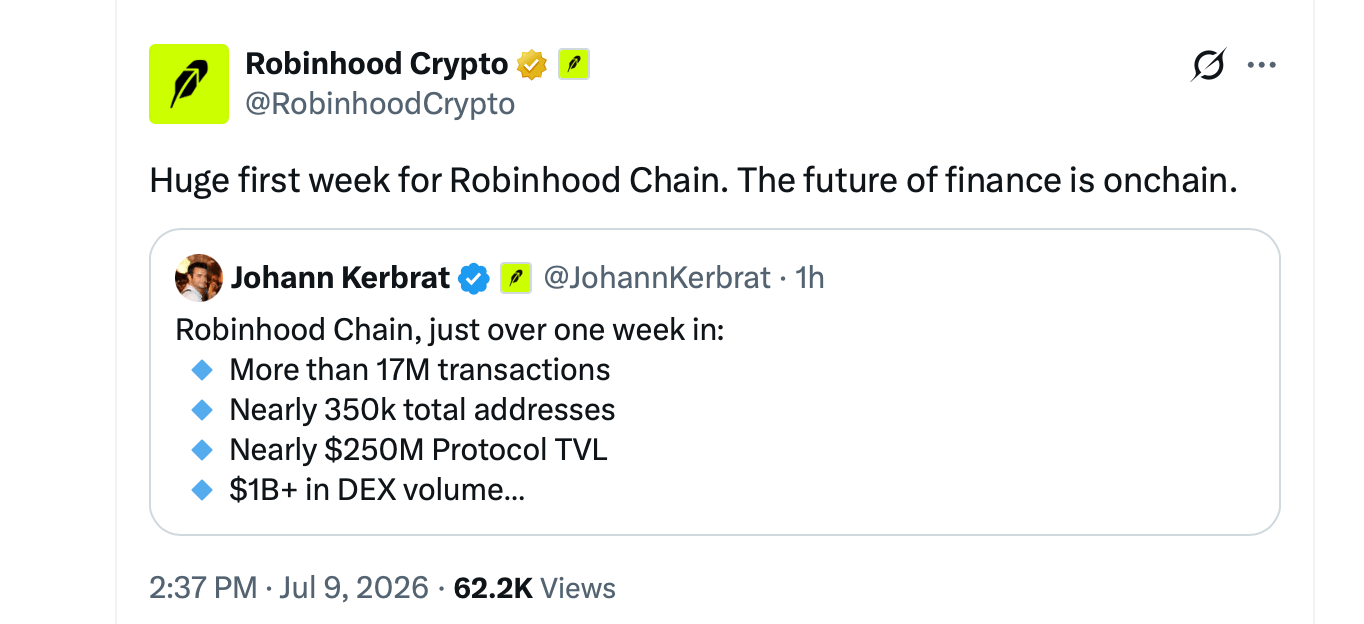
Robinhood Chain, an Arbitrum-based Ethereum layer two ( L2) network, launched on July 1, 2026, with significant fanfare centered on tokenized stocks and decentralized finance ( DeFi). However, the permissionless nature of the network has allowed bad actors to deploy fraudulent tokens at scale. Alongside legitimate stock-token projects, early onchain activity has been heavily saturated with fake tokens and meme coins, creating an environment where scammers can easily exploit inexperienced traders.
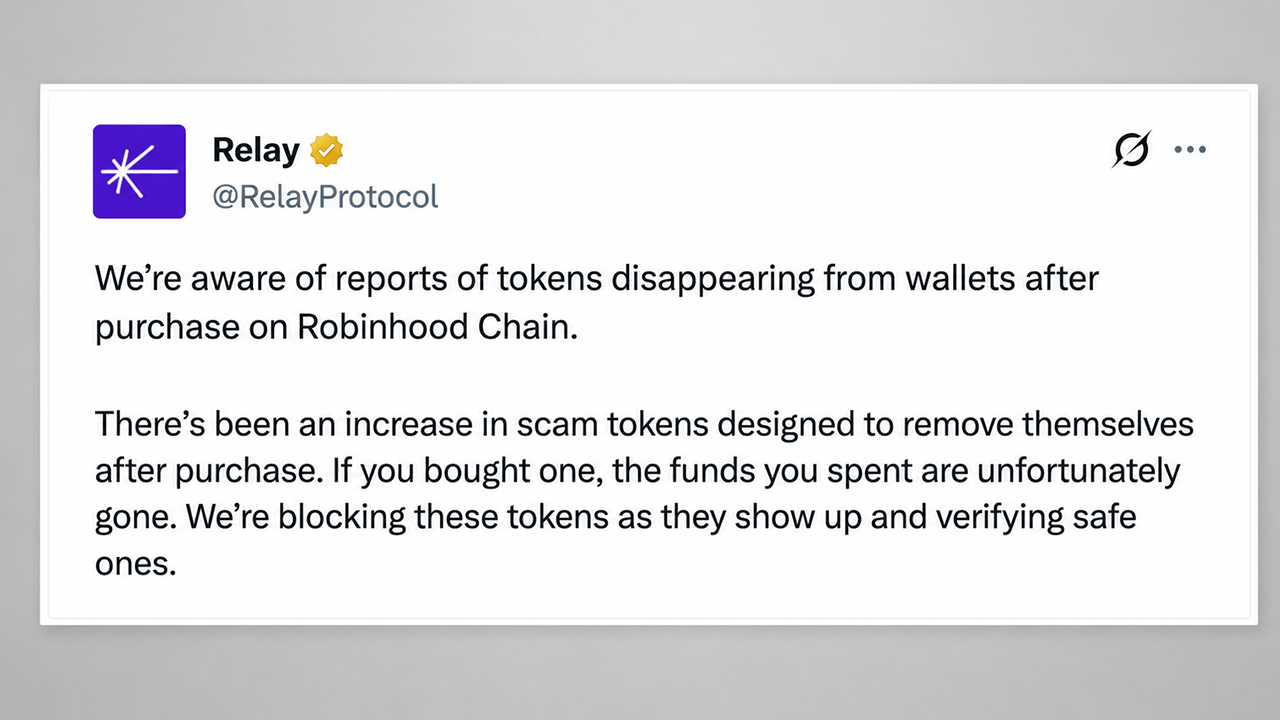
“There’s been an increase in scam tokens designed to remove themselves after purchase,” Relay Protocol stated in a social media update. “If you bought one, the funds you spent are unfortunately gone. We’re blocking these tokens as they show up and verifying safe ones”.
How the Honeypot Works
A honeypot typically functions by allowing a user to buy the token, while hardcoding rules that prevent the victim from selling or initiating an automatic transfer of the funds to the attacker’s wallet. One user reported a specific trick involving a hidden storage mapping in a token contract that bypasses standard ERC-20 security checks to drain assets without user approval.
“I was also scammed by a token called World,” explained the X user named Milo in Relay Protocol’s social media thread. Some had said the scam tokens started becoming prominent “a few days ago.” “Goodness people check the damn contract before aping into a token,” another user on X warned in the thread.
Simply an Old Scam on a New Chain
While Relay is actively filtering bad contracts, the protocol advises users to stick strictly to tokens verified by trusted sources. The issue really is simple, the L2 is a new chain seeing lots of activity, and some of it has been a swarm of bad actors leveraging the hype. This trend has been seen during the onset of other L1 and L2 chains. It’s not unique to Robinhood Chain, but visibility is due to the network’s recent launch and surrounding hype.
To mitigate risk, traders should check the contract address for legitimacy and perform a test swap with a negligible amount of capital before committing larger sums. Furthermore, if a token displays unusual market behavior, such as heavy buying pressure with zero selling activity, it is a significant red flag that the asset may be a honeypot.