Key Takeaways
- G7 leaders linked North Korean crypto thefts to wider Indo-Pacific security risks.
- Digital asset crime remains tied to sanctions concerns, weapons funding, and laundering networks.
- Governments may increase scrutiny of exchanges, DeFi platforms, mixers, and cross-chain transfers.
G7 Flags North Korea Crypto Theft in Security Statement
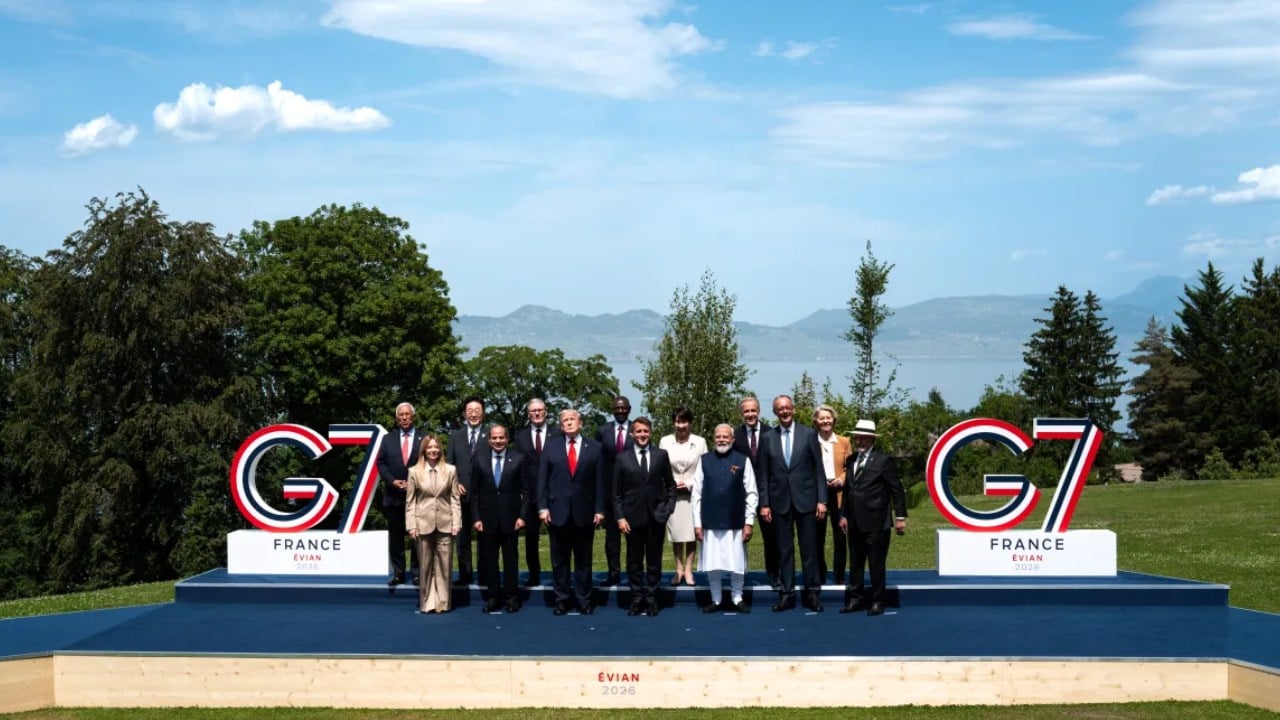
The leaders of Canada, France, Germany, Italy, Japan, the United Kingdom, and the United States, collectively known as the G7, highlighted North Korea’s cryptocurrency thefts and cybercrimes in a geopolitical statement released on June 17 following the 2026 G7 Summit in Évian-les-Bains, France.
The inclusion of digital asset-related criminal activity situated cryptocurrency concerns within a broader framework of international security and Indo-Pacific stability.
The leaders stated:
“We reiterate the need to jointly address North Korea’s cryptocurrency thefts and cybercrimes.”
North Korea appeared in the Indo-Pacific section, where leaders expressed deep concern over its nuclear and ballistic missile programs. The statement reaffirmed support for complete denuclearization under UN Security Council resolutions and urged immediate resolution of the abductions issue.
Digital assets received only one direct mention in the statement, but North Korea’s cryptocurrency thefts have become a major concern for governments and law enforcement agencies. According to public assessments and investigations, state-linked hacking groups have stolen billions of dollars from exchanges, decentralized finance protocols, and other digital asset platforms, with the proceeds widely believed to support weapons programs and sanctions-evasion efforts.
Groups such as Lazarus have been linked to some of the largest crypto thefts on record, while investigators have documented laundering techniques including mixers and chain-hopping to obscure stolen funds.
G7 Also Focuses on Ukraine, Middle East Security, and Energy Resilience
Ukraine remained the statement’s primary focus, with leaders pledging additional air defenses, long-range capabilities, energy support, and tougher sanctions on Russia’s oil and gas sectors.
The Middle East section centered on a U.S.-Iran deal backed by mediating countries and framed as an opportunity to prevent Iran from acquiring a nuclear weapon. Leaders also emphasized freedom of transit through the Strait of Hormuz, supporting a France-UK maritime security initiative.
The leaders stated:
“We reaffirm that the right of transit passage without restrictions or tolls is the bedrock of international trade.”
The G7 also committed to diversifying energy supply routes, increasing energy stocks, and reducing reliance on the Strait of Hormuz, while welcoming future Canadian energy capacity. Leaders further highlighted China’s participation in the Global Convergence for Growth Summit and pledged continued work on global economic imbalances through the G20.