
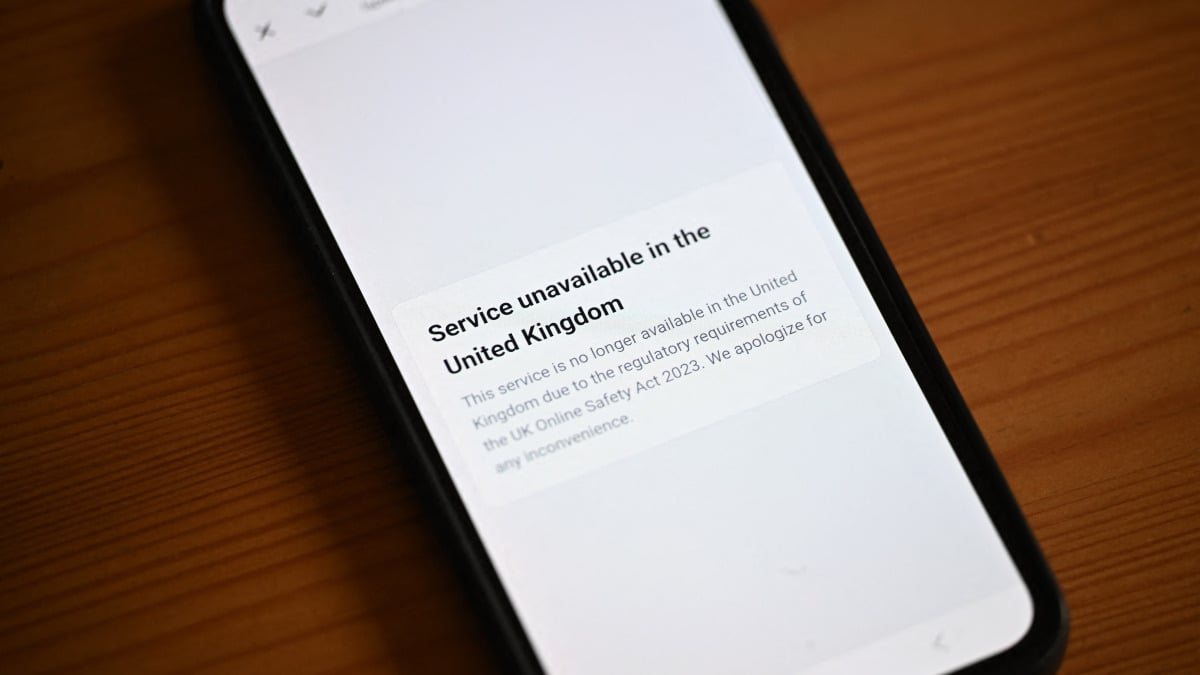
Close to a year after the enactment of the UK’s age assurance law, the Online Safety Act, Ofcom, the UK’s communications regulator, has released a report on its progress.
The Online Safety Act requires robust age checks for sites that have content “restricted to adults,” which extends from pornography to non-explicit content like the r/stopsmoking subreddit.
UK age verification, one year later
Ofcom has found that these age checks are now being deployed on an “unprecedented scale” across various sectors: porn, social media, dating, and gaming. Between July 2025, when the law went into effect, and Jan. 2026, the proportion of children “being asked to prove their age who encountered highly effective age checks” increased from 25 to 43 percent.
Hookup apps for everyone
AdultFriendFinder
—
readers’ pick for casual connections
Tinder
—
top pick for finding hookups
Hinge
—
popular choice for regular meetups
Products available for purchase through affiliate links. If you buy something through links on our site, Mashable may earn an affiliate commission.
Between July and Dec. last year, 69 million age checks were completed across a sample of 32 services, which Ofcom says is a 23-fold increase on the previous six months.
According to Ofcom’s Children’s Passive Online Monitoring study, eight percent of children aged 8 to 14 who participated visited porn providers. Half of them only reached sites with age checks in place. The majority, 87 percent, of these porn site visits were for under 30 seconds, and 65 percent were for less than 10 seconds.
Shortcomings of the Online Safety Act
Ofcom also found that all of the UK’s top 10 porn sites, and 64 out of the top 100 most popular porn sites in the country, have installed age assurance as of last month, and 10 have geo-blocked UK users. Despite this, though, Ofcom stated that “too many porn sites still don’t have age checks in place.” It’s opened 23 investigations into providers of 88 adult services.
Mashable Trend Report
Another result of the report is that children are finding porn sites without age checks via search. A third (33 percent) of Google Search results on the first page were porn sites without age checks or geo-blocking, while this was the case for 54 percent of first-page Bing results.
Ofcom stated that Google and Bing are working with it “to tackle the discoverability of porn sites without age checks via their services,” though the Online Safety Act doesn’t require search providers to use age assurance to prevent minors from viewing porn.
The report also stated that over 10 percent of 15 to 17-year-olds accessed three popular dating apps in Dec. 2025, despite age checks, so these services need to ensure their age checks are effective.
Finally, the report also casts doubt on age-inference methods, which estimate a user’s age from their behavior.
“Our message to social media companies is clear: those which use age inference models to comply with their child protection duties should switch to other methods listed in our guidance as highly effective without delay,” Ofcom stated in a press release shared with Mashable.
This will become increasingly relevant as the UK bans social media for children under 16. The UK government is planning to use similar age-assurance methods as the Online Safety Act. A recent study on Australia’s social media ban found it ineffective, partly because age estimations don’t require younger users to undergo additional checks.
Ofcom states it will deliver an assessment of what “highly effective age checks” will look like to determine someone is over 16 to Parliament by the end of Oct. It will also publish a report on app-store-level age verification by Jan. 2027.
In addition to the broad social media ban for under-16s, the UK also just announced a social media curfew for teenagers aged 16 and 17.